
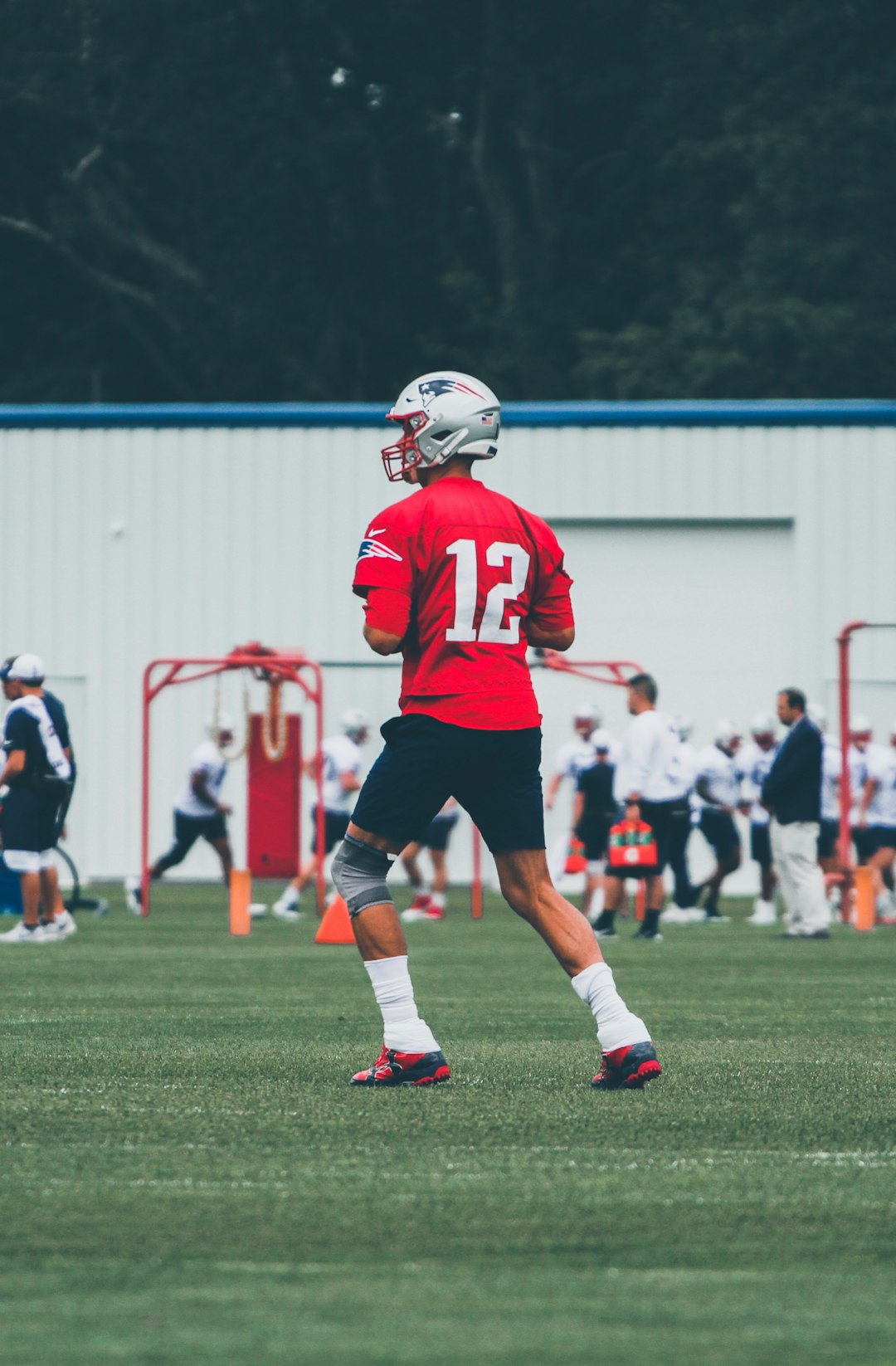
One lowered prop can turn a routine rest day into an injury mystery.
A receiver logs a limited Wednesday practice, the coach says he is “on track,” and his receptions line slips from 4.5 to 3.5. During the Super Bowl’s two-week buildup, that combination is genuinely awkward: the limitation may protect a veteran from extra workload, or it may foreshadow fewer routes and snaps.
Top NFL Offshore Sportsbooks for October 2026

BetUS

BetNow

MyBookie

Bet105

BUSR Sports

Everygame Sports

BetOnline

BetWhale

BetAnything

Xbet

Bovada

Bookmaker
The better way to analyze Super Bowl player props with confidence is to wait for confirmation. Consecutive limited sessions, reduced work in team drills, or increasingly cautious language matter more than one early designation. Market movement also needs context: a price adjustment can reflect sharp injury concern, ordinary speculation, or both. Eligible newcomers can get up to $3,000 Welcome Bonus at BetUS sportsbook, but a promotion should never substitute for checking the final practice report.
Rank every update by credibility
The strongest evidence comes from the team’s official participation report and final game designation: out, doubtful, or questionable. Next come direct comments from coaches or the player, followed by observations from established beat reporters. Anonymous chatter, social posts, and television speculation belong at the bottom.
The practice labels are narrower than they sound:
- DNP: The player did not participate; it does not automatically mean he will miss the game.
- Limited: The player handled only part of the listed workload. The label does not reveal whether he joined team drills or merely completed individual work.
- Full: The player completed the planned session, though a workload restriction could still appear on game day.
Context matters during Super Bowl week. An actual padded practice provides better information than a walkthrough. If no practice occurred, the report may be estimated—the team’s judgment of what participation would have been, not observed activity.
Most useful adjustments come from comparing consecutive days. DNP-to-limited-to-full suggests improving availability; repeated limited sessions may still point to reduced snaps or usage. Before changing a prop, confirm the final designation and market price. Bettors considering where to place it can get up to $3,000 Welcome Bonus at BetUS sportsbook, subject to the promotion’s terms.
Practice Labels Are Signals, Not Verdicts
The same label can reflect caution, pain, or conditioning.
Soft-tissue injuries and late-week downgrades raise concern; stable participation after contact work lowers it.
Braces may be protective or routine after a prior injury.
Compare earlier returns: unchanged movement and full drills matter more than equipment.
Positive language cannot replace evidence from team drills.
Non-contact work or repeated limitations keep concern elevated, especially when coaches avoid workload specifics.
Use low concern for improving, contact-ready participation; medium for mixed signals; high for downgrades, soft-tissue caution, or non-contact work. Adjust prop exposure gradually—never as a healthy/injured switch.
Eligible bettors can get up to $3,000 Welcome Bonus at BetUS sportsbook; bonus terms should remain separate from injury analysis.
Turn Availability Into Opportunity
A player being active does not guarantee a normal role. The first adjustment should estimate participation—using expected snaps, routes, or designed touches—before changing yards, receptions, or touchdown projections. A wide receiver expected to run 70% of the usual routes deserves a smaller target forecast even if efficiency remains unchanged.
The same process helps project snap share from practice-report clues. Translate each likely limitation into the football action it affects:
- Lower-body injuries: fewer carries, reduced scrambling, shorter routes, or limited motion.
- Shoulder and hand injuries: lower catch confidence, fewer contested targets, or less pass-blocking work.
- Conditioning concerns: normal early usage but fewer late-game snaps and hurry-up packages.
- Protection injuries: more pressure, quicker throws, and fewer deep attempts for the quarterback.
Teammate and opponent availability also shifts opportunity. An injured slot receiver may raise another player’s routes and targets, while a missing goal-line back can redistribute red-zone carries. Conversely, an absent offensive tackle may reduce deep-drop concepts rather than simply lower the quarterback’s overall volume.
These adjustments should remain proportional to the evidence. Sportsbooks, including promotions that let eligible customers get up to $3,000 Welcome Bonus at BetUS sportsbook, still require separate evaluation of price, role, and uncertainty.
Match the concern to the prop
The body part matters only when it changes a movement or workload behind a prop. A useful adjustment isolates that mechanism instead of downgrading every market tied to the player.
| Position and concern | Inputs that may change | Avoid assuming |
|---|---|---|
| QB—knee, ankle, foot | Rush attempts and yards; scramble rate | Fewer pass attempts unless protection or game plan changes |
| QB—shoulder, elbow, hand | Completion rate, air yards, deep-pass efficiency | Reduced designed rushing usage |
| WR/TE—hamstring, groin, ankle | Route depth, YAC, receiving yards, longest catch | Fewer targets when route participation remains intact |
| RB—lower body or conditioning | Snap share, carries, routes, late-game work | Lower early-touch efficiency without supporting evidence |
| WR/TE—hand, wrist, shoulder | Catch rate and contested-catch conversion | Reduced speed or route depth |
Correlated markets can still move in different directions. A limited receiver may retain a normal route share and remain the quarterback’s preferred short-area option, keeping target expectations stable. If deeper routes or yards after catch are restricted, however, receiving yards and longest-reception projections should fall.
That distinction prevents one injury note from becoming an indiscriminate downgrade. Each prop should reflect its own volume, efficiency, or explosive-play input.
Eligible newcomers can get up to $3,000 Welcome Bonus at BetUS sportsbook; terms and wagering requirements apply.
Reprice a Limited Receiver Without Overreacting
-
Set the healthy baseline
With 38 projected dropbacks, an 85% route rate, a 22% target rate, and 8.2 yards per target, the receiver projects for 7.1 targets and 58.3 yards.
-
Build a workload range
Assign 25% probability to 70% of routes, 50% to 75%, and 25% to 80%. The scenario-weighted route rate becomes 75%, rather than an unsupported single guess.
-
Recalculate volume
At 75% of 38 dropbacks, the receiver runs 28.5 routes instead of 32.3. Holding the 22% target rate steady lowers the target projection from 7.1 to 6.3.
-
Change only defensible efficiency inputs
If the limitation could affect acceleration, reduce yards per target modestly from 8.2 to 7.7—not every receiving input. The revised yardage projection is 48.3, with scenario outcomes of roughly 45.1 to 51.5 yards.
-
Compare projection, line, and price
Against a 54.5-yard line, the under has room beyond the model’s central estimate. If a basic distribution makes the under 57%, its fair price is about -133; -105 may qualify, while -145 would not.
Promotions such as “get up to $3,000 Welcome Bonus at BetUS sportsbook” should be evaluated separately from the prop’s modeled edge.
Check the Price Before Betting
An injury-based projection matters only relative to the available number. Compare the opener, current line, and price: a receiving total falling from 58.5 to 49.5 may already reflect a reduced route estimate, especially if the under moved from -110 to -125.
Then inspect alternate lines and related props. If receiving yards fell sharply but receptions barely moved, the market may be pricing lower efficiency rather than fewer routes. Teammate targets, quarterback completions, and longest-reception lines can reveal whether the adjustment is broad or isolated.
Line shopping remains useful because books react at different speeds. Bettors considering the offer to get up to $3,000 Welcome Bonus at BetUS sportsbook should still judge the posted line and terms independently; a promotion cannot restore value to a stale price.
Being directionally right is not enough. If the market has moved beyond the revised projection, the edge has disappeared—and passing is the disciplined result.
Bet Only When the Edge Survives
-
Build the adjusted projection
Apply only role, volume, or efficiency changes supported by the full practice trend.
-
Discount for uncertainty
Use a conservative estimate rather than the most favorable reading of a questionable or limited designation.
-
Compare line and price
Check whether the uncertainty-adjusted projection still clears the available number, odds, and market hold.
-
Demand a meaningful margin
Pass on thin edges. Prop outcomes remain volatile even when the injury read is reasonable.
-
Keep stakes restrained
Risk only a small, consistent fraction of bankroll; stronger conviction does not eliminate variance.
Eligible new customers can get up to $3,000 Welcome Bonus at BetUS sportsbook. Availability varies; qualification requirements and full promotional terms apply.
The disciplined rule is straightforward: bet only when the cautious projection still beats the actual market at its offered price. Otherwise, the practice report may be informative without creating a wager.
Top NFL Offshore Sportsbooks for October 2026
BetUS
BetNow
MyBookie
Bet105
BUSR Sports
Everygame Sports
BetOnline
BetWhale
BetAnything
Xbet
Bovada

4 comments on “How to Translate Super Bowl Practice Reports Into Smart Prop Adjustments”
The body-area mapping has been the most useful part for me. I used to downgrade every prop tied to an injured receiver equally, but a lower-body limitation can hurt explosive-yardage outcomes more than short receptions.
Now I’ll sometimes pass on the receiving-yards line while still considering catches, assuming the route and package estimates support it. Feels less dramatic than the usual “limited = automatic under” approach.
That 58.3-to-48.3 yard example is a good reminder to check the actual price. I’ve made the “great, the under moved six yards before I clicked” mistake enough times 😂 At that point the injury read can be right and the bet can still be bad.
I agree with weighting repeated limitations more heavily, but official reports during Super Bowl week can still feel oddly uninformative because the practice format isn’t always comparable to a normal week.
Would you reduce confidence across the board when one session is basically a walkthrough, even if the player gets the same designation three days straight?
Yes—I’d discount the informational value of the walkthrough rather than treat all three days equally. The repeated designation still matters, but team-drill involvement, equipment, and the specificity of coach comments should carry more weight.
If those details remain unclear, I’d widen the projection range and require a larger betting edge instead of making a bigger injury adjustment.