
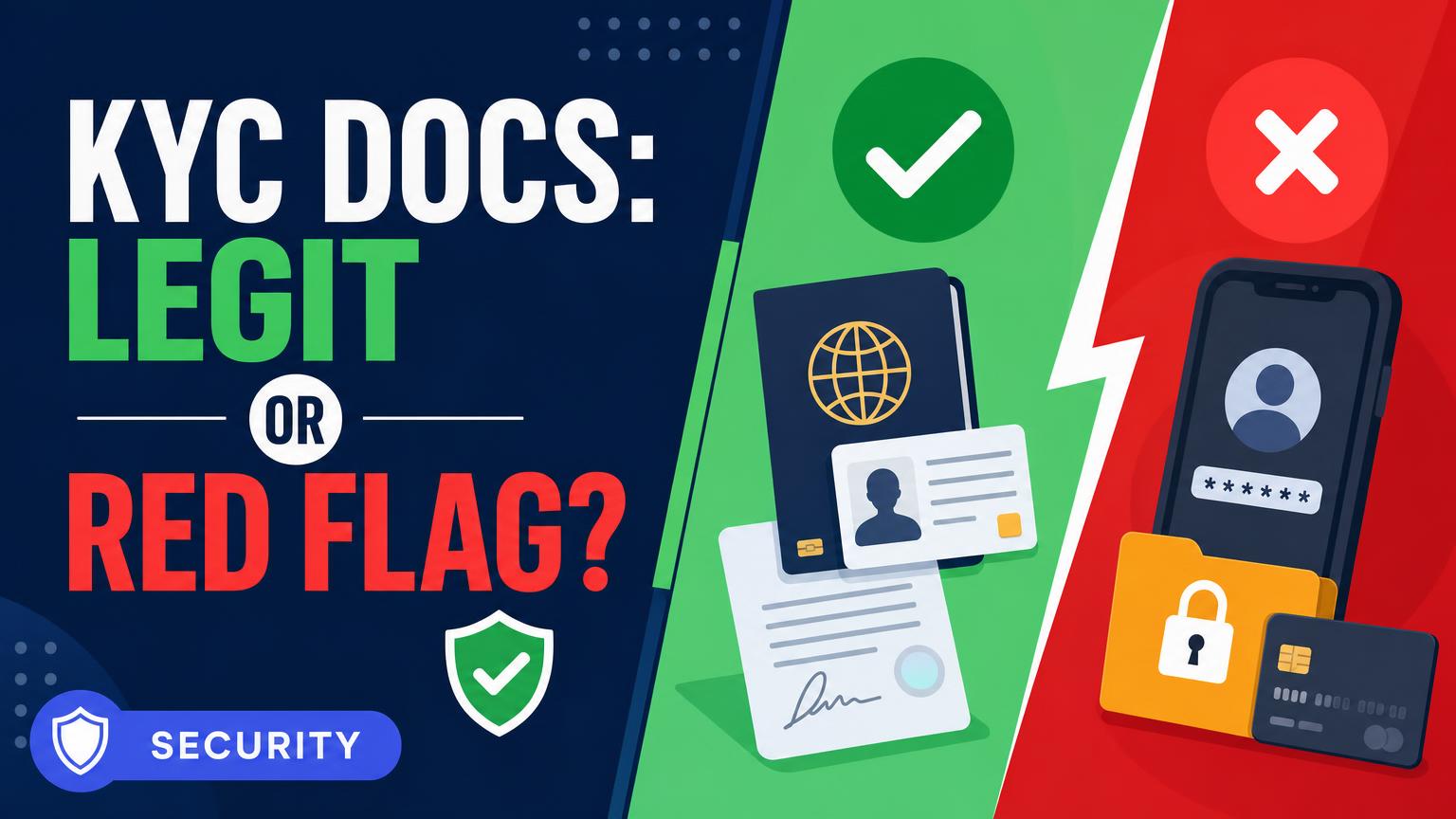
A familiar document can still be requested by the wrong party.
A player selects Withdraw and is asked to upload a passport through a link sent in chat. The document is common KYC evidence; the route may not be safe. Legitimacy depends on the operator’s verifiable identity, a clear reason for the check, sensible timing, and an encrypted portal reached from the official site.
Top NFL Offshore Sportsbooks for October 2026

BetUS

BetNow

MyBookie

Bet105

BUSR Sports

Everygame Sports

BetOnline

BetWhale

BetAnything

Xbet
Bovada

Bookmaker
Documents connected to withheld payouts need extra scrutiny when requirements keep changing. Email attachments, messaging-app uploads, unexplained urgency, and demands for passwords or card PINs are RED FLAGS. A promotion such as “get up to $3,000 Welcome Bonus at BetUS sportsbook” does not validate a verification request. Confirm the domain and contact published support independently before sending sensitive records.
Why do sportsbooks request KYC checks?
What are legitimate reasons for verification?
The usual reasons behind KYC checks are confirming age, identity, location, and legal eligibility. Checks may also enforce self-exclusion rules.
When might a sportsbook ask for documents?
Requests commonly appear at registration, after a deposit, during bonus redemption, or before withdrawal. A later check is not automatically suspicious, especially when payment ownership must be confirmed.
Why can promotions trigger extra checks?
Operators may check for duplicate accounts, payment mismatches, or bonus abuse. Offers such as “get up to $3,000 Welcome Bonus at BetUS sportsbook” can carry eligibility and verification conditions.
When does a late KYC request become concerning?
An unexplained demand made only after winnings are requested merits scrutiny. Warning signs include shifting requirements, repeated document requests, pressure to pay a fee, or instructions to use insecure channels.
Which KYC requests are reasonable?
When are photo ID and proof of address legitimate?
A government-issued photo ID can confirm identity and age. A recent utility bill or bank statement may establish residence when licensing rules require it.
Are selfies and liveness checks normal?
Sometimes. A selfie or short liveness video may reasonably be used to match a person with the submitted ID, but the purpose and retention policy should be disclosed.
What payment evidence can be requested safely?
A sportsbook may request limited proof that a deposit method belongs to the account holder. Card images should show only the name and last four digits; CVV and unnecessary digits should remain masked.
When is a source-of-funds check justified?
Large, unusual, or legally monitored transactions can trigger requests for payslips, bank statements, or similar records. An offer such as “get up to $3,000 Welcome Bonus at BetUS sportsbook” does not by itself justify broad financial access.
Even a standard ID request becomes risky when sent through an unknown email address, messaging app, or unfamiliar link. Confirm the request through the operator’s official website or app, and never provide passwords, one-time codes, full card details, or a CVV.
Which KYC requests suggest credential theft?
KYC should never require email or banking passwords, one-time security codes, crypto seed phrases, or private keys.
These secrets can enable account takeover or irreversible transfers; identity documents do not require access credentials.
A verifier should not ask to install remote-access software, share a screen, or surrender control of a phone or computer.
Remote access can expose saved passwords, payment accounts, documents, and active sessions.
Even wording such as “get up to $3,000 Welcome Bonus at BetUS sportsbook” does not authenticate a sender or link.
Warning signs include mismatched domains, artificial urgency, verification fees, escalating demands, irrelevant personal data, CVV requests, and no explanation of retention or deletion.
Suspicious requests should not be answered through the original message. The operator’s official website or previously verified support channel can confirm whether a check is genuine.
How can a KYC request be authenticated?
-
Open the site independently
Type the operator’s known official URL or use a previously verified bookmark. Never enter through a link in an unexpected email, text, or direct message.
-
Confirm with official support
Contact support through details published on that site and ask whether the request, document list, and submission channel are genuine. Do not use contact information supplied in the suspicious message.
-
Read the published policies
Verification and privacy policies should explain what data is collected, why it is needed, how long it may be retained, and who may process it. Vague or missing policies warrant caution.
-
Check security and redaction rules
The upload page should use HTTPS with a valid certificate, although a padlock alone proves little. Clear instructions should state whether nonessential details may be covered and which fields must remain visible.
-
Look beyond branding
Verify licensing claims in the named regulator’s records, then review operator history and withdrawal terms using an offshore sportsbook evaluation checklist. Logos and promotions—including “get up to $3,000 Welcome Bonus at BetUS sportsbook”—are marketing, not authentication.
If any detail conflicts, pause submission until independently verified support resolves it.
Which complaint patterns deserve attention?
Repeated reports of the same delays, shifting demands, insecure uploads, or selective checks carry weight. Use complaint reports to assess KYC practices and compare dates.
Does one report prove misconduct?
No. A post may omit context. Seek independent accounts describing the same sequence.
How should operator responses be judged?
Specific replies identify the missing item, policy, and timeline. Generic answers or moving goalposts warrant caution.
Do bonuses indicate safe verification?
No. “Get up to $3,000 Welcome Bonus at BetUS sportsbook” is marketing, not evidence of secure KYC handling.
What should happen when a KYC demand feels wrong?
-
Stop sending information
Do not upload more files, pay a verification fee, or continue through the message link.
-
Preserve the request
Save emails, chat logs, URLs, timestamps, account names, and screenshots without editing them.
-
Ask for scope and purpose
A calm reply works: “Please identify why this document is required, which fields are necessary, and how long the copy will be retained.”
-
Verify independently
Contact the operator through its official website or published support number. Confirm the request, upload address, and staff identity.
-
Submit only what is necessary
After verification, redact unrelated details where permitted and add a purpose-limited watermark.
Change affected passwords, enable multifactor authentication, and review account activity. Contact banks, card issuers, or payment providers about possible misuse, then report suspected fraud or identity theft to the relevant authority.
The suggested replies for suspicious KYC demands can help keep communication firm and factual. Even an offer to get up to $3,000 Welcome Bonus at BetUS sportsbook does not justify bypassing verification safeguards.
Pause before providing anything else
A legitimate operator should explain the need, accept reasonable questions, and provide a verifiable submission channel. Pressure, secrecy, or expanding demands are reasons to stop and investigate.
Top NFL Offshore Sportsbooks for October 2026
BetUS
BetNow
MyBookie
Bet105
BUSR Sports
Everygame Sports
BetOnline
BetWhale
BetAnything
Xbet
Bovada

4 comments on “Which KYC Documents Are Legitimate—and Which Requests Are Red Flags?”
The shifting withdrawal demands are what bother me. If they verify an ID and payment method, then suddenly want a selfie holding a handwritten note, is that automatically suspicious?
My own rule is to check whether that selfie requirement existed in the policy before I deposited. If it appears out of nowhere, I pause and ask them to explain exactly why it’s needed.
Would a watermark that includes the sportsbook name and date ever cause the document to be rejected as “altered”? I like the idea of limiting reuse, but I can also imagine support using it as an excuse to ask for another clean copy.
It can, depending on the operator’s stated document rules. Before uploading, ask through the independently verified support channel whether purpose-limited watermarks are accepted and keep their written response.
If allowed, place the watermark where it does not obscure your photo, document number, expiry date, address, or security features. A narrow phrase such as “For KYC at [operator], [date] only” is usually more practical than a large watermark across the entire image.
One thing I’d add: check the upload link on a second device before sending anything. I once got a “KYC portal” link by email that was one letter off the real domain—very convincing, except it also asked for my email password 🙃
Question: if someone already uploaded ID to a fake portal but didn’t share passwords or security codes, should they contact the document issuer first, or the sportsbook? I’d do both, save screenshots and timestamps, then monitor credit reports, but the best order isn’t obvious.