










Why Two Apps Show Different Live Super Bowl Odds and Which One Updates Faster

Why Two Apps Show Different Live Super Bowl Odds and Which One Updates Faster
<!– wp:eggb/intro {"section_label":"Live odds mismatch","lead":"Two “live” Super Bowl prices can be different at the same moment—and both can be legitimate.","body":"

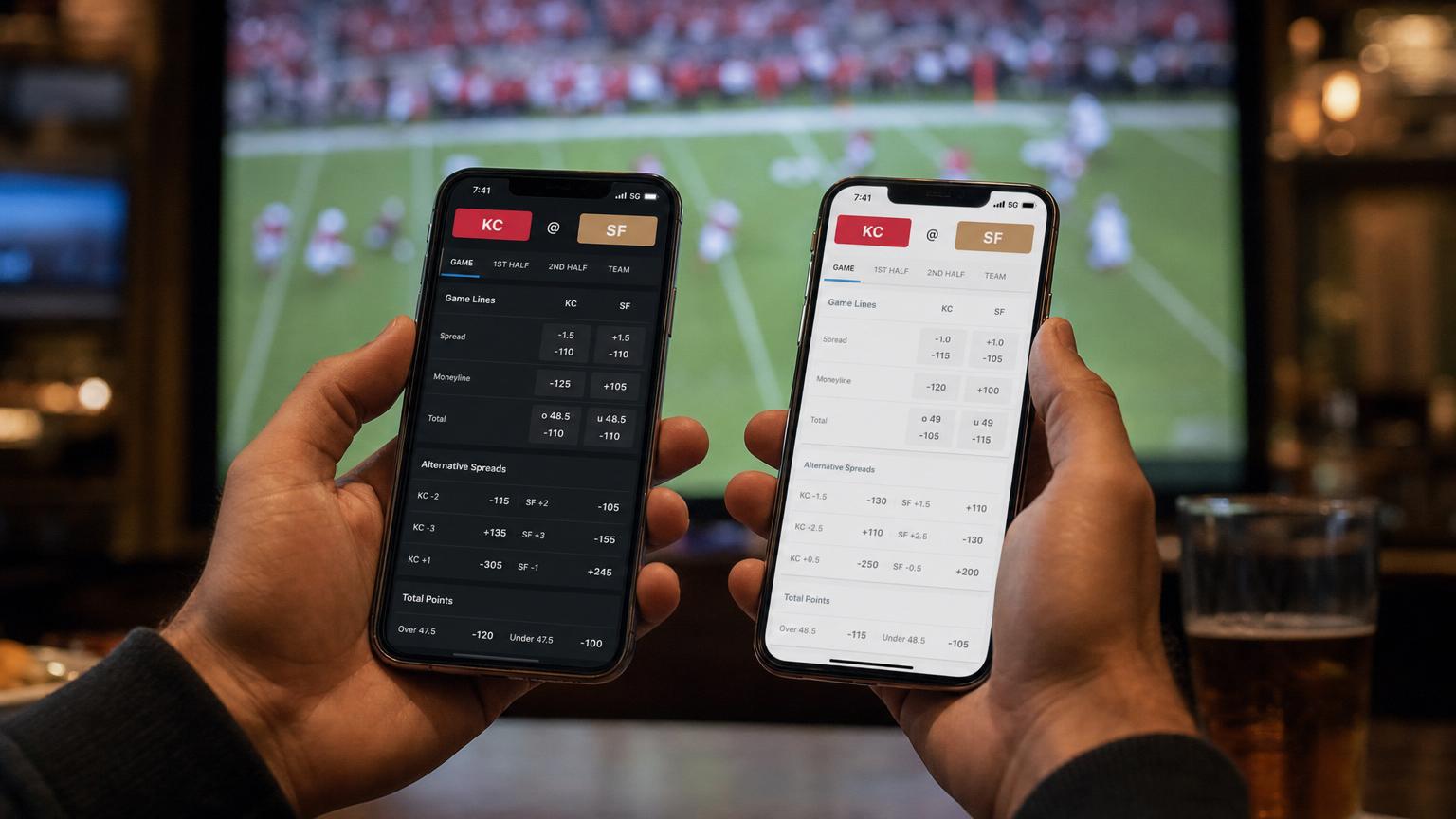
The quarterback scrambles for 18 yards, the broadcast crowd roars, and one regulated app moves the spread instantly while another still shows the old number for a second or two. That gap feels like a glitch, but it is often just the machinery of live betting: data feeds arriving at different speeds, traders shading risk, and each book deciding how aggressively to reprice before accepting a wager.

\n

The useful question is not which screen is “right.” It is whether the displayed number can actually be bet before suspension, rejection, or a worse refresh. A slightly better price with a long confirmation delay may be less valuable than a modest number that books cleanly. Promos can also affect choice; for example, eligible users may get up to $3,000 Welcome Bonus at BetUS sportsbook.

“,”points_label”:”Quick tells”,”points”:[“Frequent bet rejections usually matter more than a one-tick price edge.”,”Fast-moving markets include next play, drive result, and updated spread after explosive gains.”],”variant”:”default”,”heading_tag”:”div”,”cta_url”:””} /–>
Market mechanics

Why books shade the same game differently

Live markets are priced, not copied

Live Super Bowl odds can look as if they come from one central scoreboard, but each sportsbook is really running its own market. A feed may supply the down, distance, score, clock, and possession, yet the price that appears on screen is shaped by that book’s model, risk settings, and human traders.

A sportsbook may move faster because its model reacts aggressively to field position. Another may pause longer because a trader wants confirmation after a close catch, injury, penalty flag, or timeout. The difference is not always a mistake; it is often a different view of uncertainty.

Several factors push prices apart during the Super Bowl:

  • Liability: If too much money sits on one side, a book may shade the line to attract the other side.
  • Limits: Higher limits invite sharper action, which can force faster or stronger moves.
  • Public bias: Popular teams, star quarterbacks, and overs often draw casual money.
  • Novelty props: MVP, next touchdown scorer, and same-game props can be harder to price cleanly.
  • Game-state swings: Red-zone plays, turnovers, and replay reviews can change win probability in seconds.

This is also why promos should be separated from price quality. For example, bettors may see offers such as get up to $3,000 Welcome Bonus at BetUS sportsbook, but the live number still deserves its own comparison before any bet is placed.

The three “speeds” that matter

Live betting speed is not one thing. A sportsbook can look fast because numbers flash on the screen, but the real test comes later: whether the price reaches the bet slip cleanly and whether the wager is still accepted after pressing submit.

The three useful checks are:

  • Screen refresh speed: how quickly the odds board changes after a play, timeout, injury update, or market move.
  • Bet slip load speed: whether tapping the price pulls in the same number, or pauses, spins, and replaces it before stake entry.
  • Acceptance speed: how often the book confirms the bet instead of returning “odds changed,” “market suspended,” or a rejected stale line.

The last two usually matter more than the first. A flashy board that updates every second can still be frustrating if the bet slip constantly reprices. A slightly calmer app may be better if its live markets stay available and confirmations are cleaner.

For Super Bowl props and in-game spreads, bettors comparing apps should watch rejection patterns, not just animations. A promotion such as get up to $3,000 Welcome Bonus at BetUS sportsbook may be attractive, but live betting value still depends on whether posted prices can actually be bet before they disappear.

<!– wp:eggb/callout {"callout_type":"insight","label_type":"","title":"Fast is not always usable","body":"

The best live app is not necessarily the one with the busiest odds board. Stable markets, accurate bet slips, and fewer stale-line messages create a smoother betting experience.

“,”variant”:”default”} /–>

Why odds move before the play appears

A live betting app is not usually “seeing the future.” It is reacting to a faster clock than the one in the living room. Sportsbooks receive official or commercial game data close to field time, while TV and streaming feeds often arrive several seconds later because of encoding, distribution, device buffering, and app latency.

That gap is enough for a price to change before the viewer sees the snap, tackle, flag, or timeout. A stream may feel live, but the market can already be pricing the next down or possession. This is the key idea behind broadcast delay changing app odds during fast-moving Super Bowl markets.

A sportsbook promotion, such as get up to $3,000 Welcome Bonus at BetUS sportsbook, does not change that timing. The odds screen is driven by data feeds, trading rules, and risk controls—not the broadcast on the couch.

Price Check

How to tell whether the gap is real

  1. Match the exact market
    A Super Bowl live line can look different simply because one app shows spread, another shows moneyline, or one has moved from full game to next drive. Compare only the same team, period, and market rules.
    Treat as real when
    Same event, team, period, market, and rules are visible on both apps.
    Ignore when
    Comparing a live spread with an alternate spread, derivative market, or different period.
  2. Freeze the game state
    The score, down, distance, possession, and clock matter as much as the price. If one app has already reacted to a first down or timeout and the other has not, the “better” number may just be old.
    Treat as real when
    Both apps reflect the same score, clock, possession, and recent play status.
    Ignore when
    Calling a gap meaningful while one screen is behind the actual game state.
  3. Check the bet slip, not just the board
    The board price is only an invitation; the slip shows whether that number can still be requested. A line that changes, spins, or suspends after tapping was probably stale.
    Treat as real when
    The same price appears on the board and survives into the bet slip.
    Ignore when
    Trusting a number that disappears during loading or needs repeated confirmation.
  4. Consider limits and account context
    Two identical odds can behave differently if one app allows $20 and another allows $2,000, or if promos sit beside the market. A banner such as “get up to $3,000 Welcome Bonus at BetUS sportsbook” is separate from whether the live price itself is better.
    Treat as real when
    Comparable stake limits, acceptance speed, and no bonus confusion around the quote.
    Ignore when
    Treating a tiny-limit or promo-adjacent price as equal to a fully bettable live number.

Why live markets lock at the worst moment

Live Super Bowl markets often freeze right when the next bet feels most interesting: the snap, a booth review, a flag, an injury timeout, a turnover, a field-goal try, a two-point attempt, or a frantic end-of-half clock sequence. Those moments can swing win probability instantly, so books pause betting until the data feed, trader, and model agree on the new state.

A book that stays open longer may look faster, but the trade-off can show up elsewhere:

  • Worse prices to protect against stale information.
  • Lower live limits on volatile props or drive markets.
  • Stricter bet confirmation, where the slip spins and accepts only after the move.

That is the practical reason behind markets getting suspended midgame. A promo such as get up to $3,000 Welcome Bonus at BetUS sportsbook can be useful, but live-bet quality still depends on pricing, limits, and acceptance speed.

Market depth

Not every live market moves together

Props and drive bets can lag or lock differently

A spread and moneyline can refresh first because they sit closest to the main in-game model. Smaller markets often behave differently. Totals, team totals, next-drive bets, next-score markets, and player props may pause longer after injuries, penalties, reviews, or red-zone snaps because one event can change the whole price.

Settlement rules also matter. A live moneyline may include overtime, while some props or period markets may not. A “next score” bet can have special handling after defensive scores, safeties, or end-of-half clock situations. Before comparing two apps, the useful check is what time counts for a live bet, not just which number looks better.

Promos can add another wrinkle. A bettor chasing prop value might also notice offers such as get up to $3,000 Welcome Bonus at BetUS sportsbook, but the bonus terms will not make a slow-settling or differently graded market identical to another book’s version.

<!– wp:eggb/step-list {"section_label":"Test plan","title":"A safer way to test a live betting app before the Super Bowl","steps":[{"title":"Start with ordinary games","description":"

Test during regular NBA, NHL, college basketball, or smaller NFL markets before any high-stakes Sunday. The goal is to see how the app behaves when mistakes are cheap, not to chase a perfect number.

“},{“title”:”Track the same market on two apps”,”description”:”

Pick one simple market, such as moneyline or spread, and watch several possessions or drives. Note which app moves first, which one pauses longer, and whether that pattern repeats.

“},{“title”:”Open the bet slip, then wait”,”description”:”

A fast screen price means little if the ticket changes after selection. Check whether the slip holds the displayed odds, reprices clearly, or leaves the bet pending while the game moves on.

“},{“title”:”Notice suspensions after key moments”,”description”:”

Reliable apps tend to lock predictably after shots, flags, turnovers, injuries, and reviews. Random-looking freezes can be more frustrating than a slower app with consistent rules.

“},{“title”:”Use tiny stakes for real confirmations”,”description”:”

Only accepted or rejected wagers reveal the final speed. A few minimum-size tests show whether the app honors prices, rejects stale tickets quickly, or keeps bets pending too long.

“},{“title”:”Separate bonus value from live speed”,”description”:”

Promos can matter — for example, players may see offers to get up to $3,000 Welcome Bonus at BetUS sportsbook — but bonuses do not prove the live engine is faster or more dependable.

“}],”note”:”

Repeated behavior across several games is more useful than one lucky fast update.

“,”toc_label”:”Test app speed”,”variant”:”checklist”,”anchor”:”test-app-speed”,”include_in_toc”:true,”level”:2} /–>

Bonuses do not make an app faster

Promos can add value, but they do not fix weak live betting execution.

A large offer can be useful for a new account, but it should sit behind the basics when comparing live Super Bowl odds. Eligible users may get up to $3,000 Welcome Bonus at BetUS sportsbook, yet that number says little about whether a live price will stay available long enough to place.

The better test is still practical performance:

  • Price quality: Is the number competitive after the slip opens?
  • Uptime: Do key markets stay posted during big drives?
  • Limits: Is the displayed line available for a meaningful stake?
  • Rules and rollover: Does the bonus require playthrough that changes the real value?
  • Market depth: Are props, totals, and drive markets actually available live?
  • Acceptance: Are bets confirmed, repriced, or rejected under pressure?

A promotion can sweeten the account setup. It should not decide which app gets trusted in a fast-moving fourth quarter.

<!– wp:eggb/callout {"callout_type":"tip","label_type":"","title":"Separate bonus value from betting speed","body":"

A strong offer is best treated as an account perk. Live-betting confidence comes from repeated evidence: stable markets, fair limits, clear rules, and accepted wagers when the game speeds up.

“,”variant”:”default”} /–> <!– wp:eggb/conclusion {"section_label":"Bottom line","title":"Which Super Bowl odds app updates faster?","points":["The better test is not the first number on screen; it is the price that actually gets accepted before the market locks or reprices.","Multiple regulated sportsbooks are best used as comparison tools, especially when live markets disagree for only a few seconds."],"summary":"

No sportsbook app is always the fastest across every Super Bowl market. One may refresh moneyline prices quicker, another may handle props better, and a third may accept fewer bets during volatile drives. Flashing numbers matter less than completed wagers at the posted price.

\n

Promos can still be useful for bankroll planning — for example, players may get up to $3,000 Welcome Bonus at BetUS sportsbook — but bonus size does not prove live-betting speed. The steadier approach is comparing regulated books, noting which one actually confirms bets, and resisting the urge to chase every moving price.

“,”toc_label”:”Final verdict”,”variant”:”default”,”heading_tag”:”h2″,”anchor”:”final-verdict”,”include_in_toc”:true,”level”:2} /–>
Andy
Andy
Hi I'm Andy and as a regular bettor on sports I know where to spot a good sportsbook sign up deal. With over 25 years of placing wagers on sports betting including NFL, horse racing and soccer I can lend my expertise to writing and advising you on everything sports and NFL betting. To your success.

2 comments on “Why Two Apps Show Different Live Super Bowl Odds and Which One Updates Faster

The “three speeds” point is the part most people miss. I used to think App A was faster because the number flashed first, but half the time the bet slip sat there spinning and then came back with a worse price.

For me, the only useful test was timing from tap to accepted wager during a random NBA live game. Not glamorous, but it showed which app was actually usable before I tried anything bigger.

The broadcast delay thing still messes with my head lol. Odds moving before I see the snap makes it feel rigged, even though I know they’re using field-level feeds.

What worked for me was turning off the TV audio and following a game tracker instead when testing. Less emotional whiplash 😂

Add a Comment