
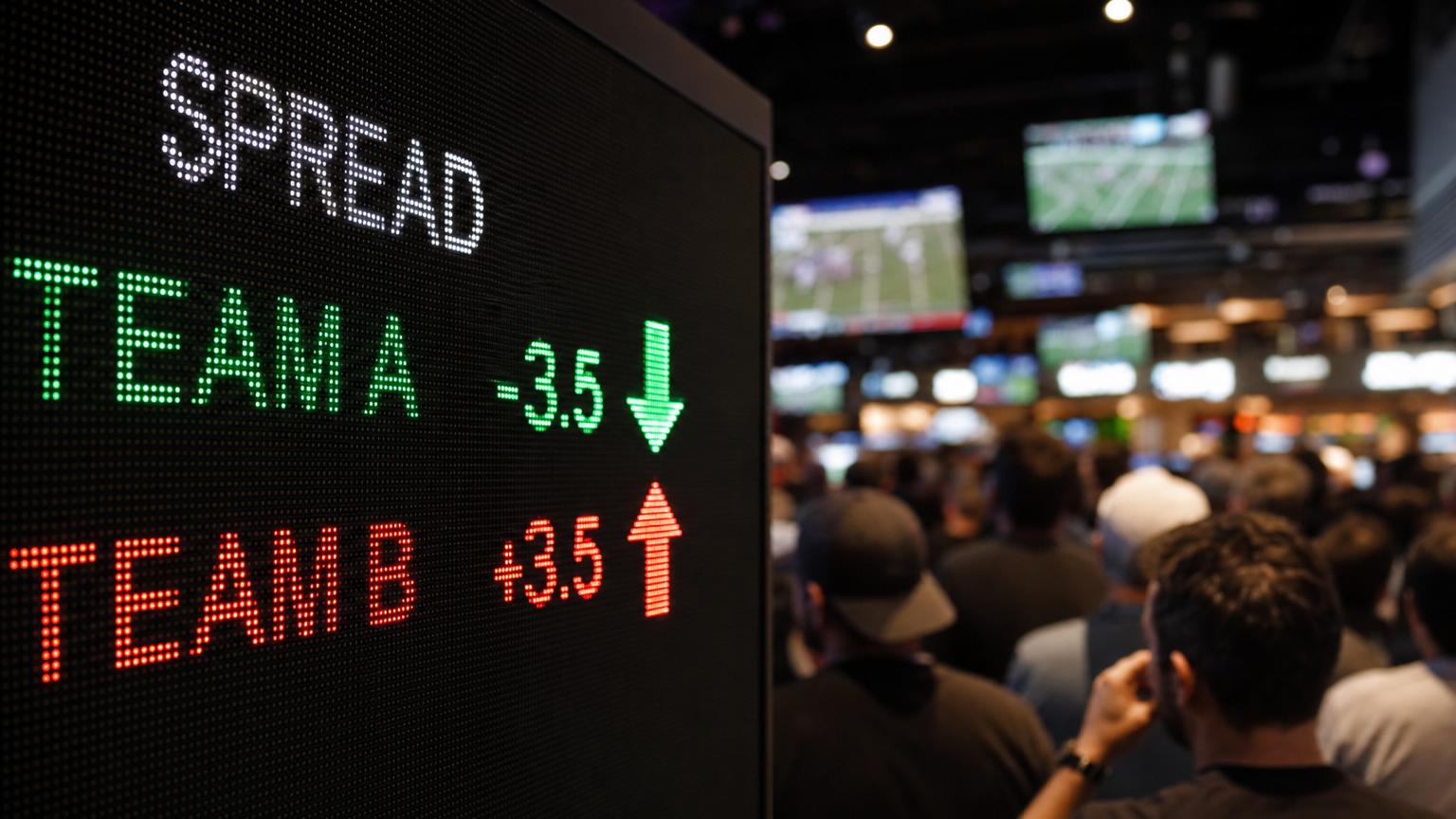
The strangest line move is often the one that refuses to follow the loudest crowd.
A Saturday favorite is trending everywhere: radio hosts like it, betting forums are stacked with support, and the ticket count shows most casual wagers landing on the same side. Then the sportsbook moves the spread from -3 to -2.5. At first glance, that feels backwards — why make the popular side cheaper?
Top NFL Offshore Sportsbooks for August 2026


That disconnect is the heart of reverse line movement. The line is not reacting only to how many bets appear on a team; it is reacting to market pressure. A smaller number of larger wagers, especially from respected bettors, can matter more than a pile of low-stakes public tickets. Sportsbooks adjust to manage risk and respect sharper money, so the move can point toward the side drawing fewer bets but more influential action.
- Eligible players can get up to $3,000 Welcome Bonus at BetUS sportsbook; terms and location rules apply.
Key terms behind reverse line movement
- Reverse line movement
Reverse line movement happens when the odds move toward one team even though the larger number of reported bets is on the other side. For example, if 70% of tickets are on Team A but the line improves for Team B, the market is pushing against the crowd.
- Public side
The public side usually means the side with more individual bets, not necessarily the side with more total dollars. A hundred small bets can outnumber a few large wagers while still carrying less weight.
- Ticket count
Ticket count is the number of bets placed on each side. It shows popularity, but it does not show bet size, timing, or whether the bettors are respected by the sportsbook.
- Money percentage
Money percentage, often discussed through handle vs tickets metrics, estimates how much of the wagered money is on each side. When tickets and money disagree, the money side often explains why a line moved.
- Sharp pressure
Sharp pressure refers to bets from accounts or groups that sportsbooks take seriously because of their track record. Even while casual bettors chase promos such as get up to $3,000 Welcome Bonus at BetUS sportsbook, larger informed wagers may have more influence on the number.
The normal move before the reverse
Before reverse line movement makes sense, the ordinary pattern has to be clear: when a popular side attracts heavy betting, the sportsbook usually adjusts the number to make that side less appealing.
If Team A opens as a -3 favorite and most bettors take Team A, the line may move to -3.5 or -4. Latecomers now pay a worse price for the same opinion. On a total, an opening 47.5 might rise to 49 if steady Over money shows up.
That move is not mysterious. Books are managing risk, reacting to demand, and following a market shaped by limits, timing, and respected accounts. For a broader setup, it helps to understand what can drive early line movement before judging whether a later move is unusual.
A normal public-driven move looks like this:
| Betting pattern | Expected line reaction |
|---|---|
| More bets on favorite -3 | Favorite moves to -3.5 or -4 |
| More bets on Over 47.5 | Total rises to 48.5 or 49 |
| More bets on underdog +7 | Underdog drops to +6.5 |
This baseline is what makes reverse line movement stand out: the crowd pushes one way, but the number travels the other. Bettors comparing prices can also check promos such as get up to $3,000 Welcome Bonus at BetUS sportsbook, though bonus terms should be read before depositing.
What overpowers the public side
Reverse line movement usually starts when the sportsbook sees pressure that matters more than raw bet count. A team may have 70% of the tickets, but if many of those are small recreational bets and the other side attracts fewer, larger wagers, the line can still move against the crowd.
The biggest force is often sharper money. Books pay attention when respected bettors, syndicates, or accounts with a strong history take a position. Their action can suggest the opening number was off, especially in lower-liquidity markets.
Wager size matters too. One $20,000 bet can outweigh hundreds of $20 public bets. Sportsbooks are not simply counting slips; they are managing exposure and adjusting toward a number they believe is closer to the true market price.
New information can also flip a line quickly. Injury updates, weather changes, lineup news, travel issues, or a starting goalie confirmation can make yesterday’s public lean less relevant. In those moments, the move may look “reverse,” but the market is really reacting to fresher data.
Books also manage liability. If too much money piles up on one outcome at a bad price, the sportsbook may move the line to reduce risk or invite buyback on the other side. That does not mean every game is perfectly balanced; many books are comfortable needing one side if the price is right.
Finally, key numbers matter. In football, moving from -2.5 to -3 or -3 to -3.5 is a bigger decision than moving from -5 to -5.5. Books may resist crossing those numbers unless the pressure is strong enough.
Public percentages can be useful, but they are incomplete without line history and bet sizing clues. A sportsbook promo such as get up to $3,000 Welcome Bonus at BetUS sportsbook may bring in plenty of casual action, yet the market can still move the other way when sharper or larger bets arrive.
Reverse line movement in real betting markets
A simple NFL spread example makes the idea easier to see. Suppose the Cowboys open -3 against the Giants, and 72% of tracked tickets are on Dallas. A normal public-driven move would push Dallas to -3.5 or -4, but the line drops to Cowboys -2.5 instead. The public side is Dallas, the line direction moves toward New York, and it qualifies as reverse line movement because the market improves the price for the popular team.
Totals can show the same pattern. If a college basketball game opens at 148.5 and most bettors are taking the over, the expected public move is upward. If the total falls to 146.5 while ticket count still favors the over, the market is moving against the crowd. That usually suggests respected under money, a limit increase revealing stronger opinion, or information the broader betting public has not fully priced in.
Moneylines work too, though the movement can look less dramatic. A baseball favorite might open at -140 with most tickets on that favorite, then slide to -125. The favorite becomes cheaper despite attracting more bets, which points to pressure on the underdog at a sharper or larger-stake level.
Major-event markets add another layer because public volume is enormous. In Super Bowl betting, celebrity teams, star quarterbacks, and narrative-heavy angles can flood one side with casual tickets. Understanding how Super Bowl lines work helps explain why a small move against a heavily backed side can be more meaningful than it looks.
Sportsbooks such as BetUS may promote offers like get up to $3,000 Welcome Bonus at BetUS sportsbook, but bonus hunting should not replace line reading. Reverse movement is a clue, not a guarantee; it works best when paired with price history, injury context, and awareness of key numbers.
What reverse line movement is not
It only becomes meaningful when public-side betting is clear and the market still moves the other way.
A line can drift for ordinary reasons before the betting split is strong enough to say the public is being faded. Without ticket context, it is just a price move.
Early moves often reflect sportsbooks fixing a soft opening number before the wider market settles.
If a team opens -2.5 and quickly becomes -3.5 before public betting builds, that is more likely market calibration than a true public-versus-sharp split.
Steam is a fast, coordinated market move; RLM is specifically movement against the popular ticket side.
A steam move can create RLM when it hits the unpopular side, but steam can also follow the public. Bettors comparing markets often look at how steam books react before assuming the move is reverse.
News-driven moves can be rational without revealing much about who bet first.
A quarterback downgrade, goalie change, or weather shift can pull the line away from a public side. That may look sharp, but the cause is information. Promotions such as get up to $3,000 Welcome Bonus at BetUS sportsbook are separate from interpreting line movement.
How to judge whether reverse line movement is worth noting
-
Start with the size and source of the split
A lopsided ticket count by itself is thin evidence. It becomes more interesting when the money percentage disagrees with the ticket percentage, especially if the larger-money side matches the line move.
-
Check when the move happened
Early moves can reflect opener correction; late moves may come from limits rising and sharper bettors entering. A useful read asks whether the move appeared after meaningful betting volume, not just after a soft opening number.
-
Compare several sportsbooks
One odd price at one book can be noise, risk management, or slow updating. A stronger signal shows up across the market, with multiple books moving the same direction instead of one outlier drifting alone.
-
Respect key numbers
In football, a move from -2.5 to -3 or +7.5 to +7 matters more than a random half-point elsewhere. Movement through 3, 7, or other important margins often says more than the raw ticket split.
-
Look for a news explanation
Injuries, weather, lineup changes, travel spots, and rest can all create movement that only looks “reverse” on the surface. Before treating it as sharp influence, it helps to compare the move with a broader sharp money checklist.
-
Decide whether the current price still has value
The best signal can still be useless if the number is gone. Reverse movement explains pressure; it does not guarantee that the new price remains worth betting.
Price shopping is part of this process. Eligible new players can get up to $3,000 Welcome Bonus at BetUS sportsbook, but bonus terms and available lines should be checked before betting.
Keep the Signal in Perspective
Reverse line movement is best treated as a clue, not a command. It may suggest that respected bettors disagree with the public, but the public percentages shown on betting screens are often incomplete, delayed, or based on a limited sample of sportsbooks. A line that looks “wrong” in one feed may simply reflect stale data or a different customer base.
Sportsbooks also do not all move together. One book may shade a popular favorite because its customers are heavy on that side, while another may hold closer to market consensus. That is why comparing multiple books matters; the sharper read usually comes from broad movement, not a single outlier.
Timing is the hardest part. By the time reverse movement is obvious, the best number may already be gone. A bettor noticing +3 move to +2.5, for example, is no longer evaluating the same wager as someone who took +3 earlier. That difference matters for closing line value and long-term price quality.
A practical way to use RLM is to slow down rather than chase:
- Check whether the move is market-wide.
- Look for injury, lineup, weather, or schedule news.
- Compare the current price with the opener and key numbers.
- Pass if the edge depends on a number that no longer exists.
For bettors shopping lines, promotions can still improve the overall setup. For example, eligible new players can get up to $3,000 Welcome Bonus at BetUS sportsbook, but a bonus should not turn a weak RLM read into a bet.
Reverse movement is most valuable before the market fully adjusts. Once the line has crossed a key number or matched the sharper books, the original clue may still be interesting—but the betting opportunity may be gone.
A Simple Way to Use Reverse Line Movement
- Check whether the move crosses or protects a key number, especially 3 and 7 in football.
- Treat a worse price as a warning sign; the best read on the market may already be gone.
- Use bonuses and book options for price shopping, not as a reason to force a bet.
Reverse line movement works best as a checklist, not a shortcut. First, identify the public side through ticket percentages, then compare the line at several reputable sportsbooks. If most books are moving against that popular side, check for injuries, weather, lineup changes, or other news that could explain the move without assuming it is automatically sharp action.
From there, the practical question is price. Key numbers matter, especially in spread betting, and a move from +3.5 to +2.5 is not the same as a move from +1.5 to +0.5. Shopping matters too: a half-point or a few cents on a moneyline can change the value of the bet. Bettors comparing markets can also look at promos — for example, get up to $3,000 Welcome Bonus at BetUS sportsbook — but the number still comes first. The final test is whether today’s line is likely better than the closing line. If not, reverse line movement may be useful information, but not a reason to bet by itself.

3 comments on “Meaning of Reverse Line Movement: Why Lines Move Against the Public”
So if I’m understanding this right, RLM is more meaningful when the money % agrees with the move, but what about cases where the money % is also public-ish because one huge bet skews it?
Like if 70% of tickets and 75% of money are on Team A, but the line still moves toward Team B, is that still a “sharp” signal or just a book taking a position / liability thing? This is the part that always makes my brain hurt a little 😅
Good question, and that’s exactly why RLM shouldn’t be treated as automatic “sharp side = bet it.” If tickets and money are both heavily on Team A but the line moves toward Team B, something else is likely overpowering that visible data: sharper respected wagers, market-making books moving first, injury/news info not fully public yet, or liability management.
The tricky part is that money percentage can be noisy because, as you said, one or two large wagers can distort it. I’d look for confirmation: did multiple books move the same way, especially sharper books? Did it cross or resist a key number? Did the move happen early from respected action or late near limits rising? Those details matter more than the raw percentages alone.
The section on what RLM is *not* was helpful, but I still struggle separating it from an opener correction.
Say an NFL total opens 47.5, public bets the over, but within an hour it drops to 45.5 everywhere. Is that reverse movement, or just the market saying the opener was bad? Feels like both can look identical if you’re not watching from the second it posts.