
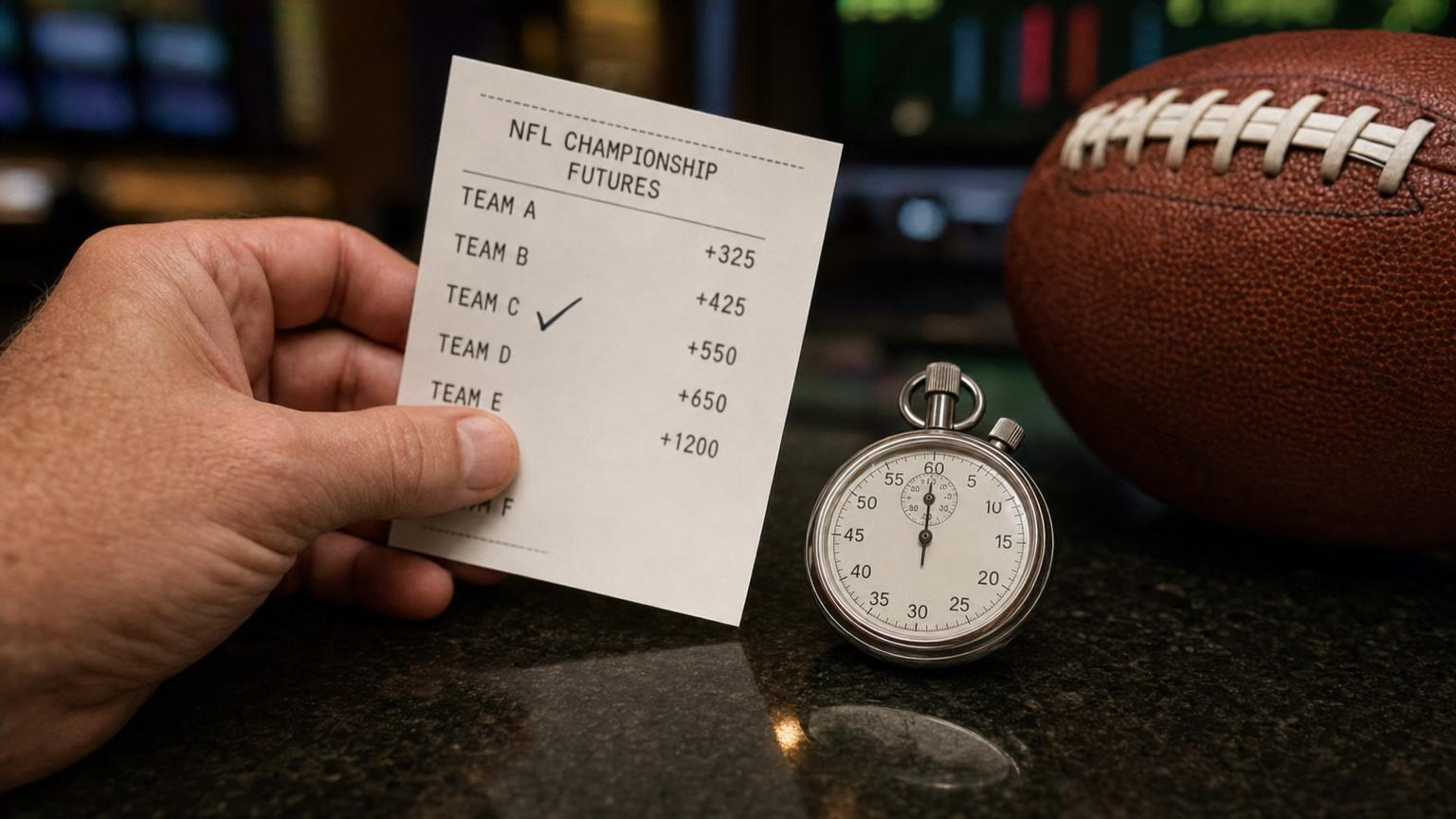
A winning Super Bowl future is not always paid the instant the clock hits zero.
A futures ticket can look perfect while the account balance still sits unchanged. The favorite has lifted the trophy, the broadcast has moved to confetti shots, and the slip clearly names the champion — but the wager remains marked as open or pending. That delay is frustrating, especially after a bet has been sitting for weeks or months, but a short pause is usually normal.
Top NFL Offshore Sportsbooks for October 2026

BetUS

Bet105

BetOnline

BetWhale

BetAnything

Xbet

Bovada

MyBookie

Bookmaker

BetNow
Sportsbooks do not always grade from the TV scoreboard alone. They wait for the event result to be confirmed, then run that result through their own bet-settlement system. In plain terms: the game being over and the sportsbook paying the ticket are two separate steps. Most straightforward Super Bowl futures settle soon after the final result is official, though timing can vary by book, market type, and any rule checks attached to the wager.
- Some books grade major futures within minutes; others may take longer during peak traffic after the game.
- Promo note: eligible new players can get up to $3,000 Welcome Bonus at BetUS sportsbook; terms and conditions apply.
What settlement means
In sportsbook terms, settlement is the moment a bet is officially graded in the account. For a season-long Super Bowl winner future, that usually happens after the final score is confirmed and the sportsbook’s trading or grading system marks the ticket as resolved.
A settled ticket can land in a few different ways:
- Win: the selected team wins the Super Bowl, and the listed odds are paid.
- Loss: another team wins, and the stake is kept by the sportsbook.
- Void: the wager is canceled under house rules, with the stake returned.
- Push: rare for this market, but possible in some rule structures where no win or loss is recorded.
- Adjusted payout: uncommon, but some promotions, dead-heat-style rules, or special terms can change the final return.
This article is concerned with season-long Super Bowl champion futures, not every NFL futures market. Awards, conference winners, division bets, win totals, playoff props, and “to make the playoffs” markets may use different wording, deadlines, and stat-provider rules. A bettor comparing books should start with how Super Bowl futures and settlement rules work before assuming one NFL market grades like another.
Promotional offers can add another layer. For example, players may see “get up to $3,000 Welcome Bonus at BetUS sportsbook,” but bonus funds, free bets, and rollover terms may settle differently from cash wagers. The market result and the bonus-credit rules are often separate issues.
What result sportsbooks use
A Super Bowl futures ticket normally grades from the official NFL-recognized result, not from what an announcer says, what trends on social media, or what a live-score app flashes first. Broadcasts can be ahead of settlement systems, and unofficial score feeds can briefly show errors or premature finals. Sportsbooks wait for the result source tied to their rules and data providers before marking a season-long champion future as won or lost.
The practical sequence is usually simple:
- Final whistle: The game ends on the field, and the champion is effectively known.
- Official confirmation: The league’s result is recorded through official channels and statistics partners.
- Data feed update: The sportsbook’s odds and grading systems receive the final result from a trusted feed.
- Bet grading: The market settles automatically if the feed maps cleanly to the wager.
- Review if needed: Staff may check the market manually if there is a feed mismatch, rule question, or account-specific issue.
That last step is why two sportsbooks may not grade at the exact same minute. One book’s automation may close the market quickly, while another may wait for an internal review or batch-processing cycle. This is normal settlement behavior, not necessarily a sign of a problem; it fits the broader pattern of how sportsbooks handle settlement timing across major events.
For a futures bettor, the useful habit is to separate known outcome from graded outcome. The team may have lifted the trophy, but the ticket is not settled until the sportsbook updates the bet slip or account ledger. Promotional messaging can add to the noise, too; even a line such as “get up to $3,000 Welcome Bonus at BetUS sportsbook” is separate from the house rules that govern when a wager is officially paid.
How long settlement usually takes
A Super Bowl future may grade almost immediately after the final score is official, especially at books with automated feeds and lighter review queues. In other cases, the same market can remain pending for several hours, and it is not unusual for some accounts to see settlement the next morning. That lag does not automatically signal a problem with the wager.
The biggest driver is simple volume. A Super Bowl winner market can involve thousands of open tickets, free-bet conversions, boosted odds, partial hedges, and cash-out histories that all need to line up before balances update. Books also tend to slow down settlement on tickets tied to large payouts, unusual account activity, or markets with promotional conditions attached.
Common reasons a winning future may sit pending include:
- High postgame bet volume, especially immediately after the final whistle.
- Manual review for large wins or risk-team checks.
- Bonus or rollover restrictions that affect withdrawable balance.
- Identity or payment verification still required on the account.
- Data reconciliation between official league results, odds feeds, and internal ledgers.
Promotions can add another layer. A sportsbook may advertise a strong sign-up offer—such as get up to $3,000 Welcome Bonus at BetUS sportsbook—but the bonus language does not replace the house rules, grading policy, rollover terms, or account-verification requirements. The same applies to odds boosts, free bets, and insurance-style promos: the ticket can be correctly graded while funds remain subject to separate account terms.
For practical expectations, a pending status within the first few hours after the game is usually ordinary. If a ticket remains unsettled into the next business day, the account history, bet slip ID, and promotion terms are the details most likely to matter when contacting support.
A pending Super Bowl future usually means the book has not finished grading or applying account rules. It should not be treated as a loss unless the settled result, bet history, or house rules say so.
House Rules Decide the Weird Cases
Most Super Bowl futures are simple: the team wins or loses, and the bet is graded from the official result. The harder questions come from the sportsbook’s own rules. Those rules explain what happens when a market is postponed, renamed, suspended, reopened, or affected by an unusual league decision.
A few details are worth checking before treating one book’s answer as universal:
- “All-in” language may mean a bet stands even if a team fails to qualify, relocates, changes conference alignment, or has its season disrupted.
- Participation requirements can matter if a market says a team must start the season, play a minimum number of games, or remain eligible.
- Void and cancellation rules differ when an event is not completed as scheduled or the league changes the format.
- Dispute procedures usually set deadlines for raising grading issues and explain what records the operator treats as final.
Another subtle point is timing. Some books apply the rule set in place when the bet was placed. Others reserve the right to grade under rules in effect when the event is completed, especially if terms were updated during the season. That distinction can matter in rare edge cases.
Promotions do not usually change settlement rules, but bonus terms can affect withdrawable funds after a winning future is graded. For example, a player seeing an offer to get up to $3,000 Welcome Bonus at BetUS sportsbook would still need to separate the futures market rules from the bonus rollover and eligibility terms.
When a result looks unusual, the best source is the specific house rules attached to that operator, not a general betting forum summary.
Common exceptions that can change settlement
Most Super Bowl futures survive ordinary disruption. If the NFL moves a game to a different stadium, shifts the date, or adjusts the playoff calendar but still crowns an official Super Bowl champion, sportsbooks usually grade the market against that champion. The bet may sit unsettled longer, but the underlying question has still been answered.
The more difficult cases are those where the season no longer produces the result the market was built around. Sportsbooks handle these under their own house rules, so the exact outcome can differ by operator and by the wording in place when the wager was accepted.
Routine disruption usually does not void the future
A weather delay, venue change, neutral-site relocation, or schedule reshuffle is normally treated as part of the event continuing. The same is often true if a playoff game is postponed and played later. As long as the league recognizes a champion, the Super Bowl winner market generally remains live.
That distinction matters because a delayed settlement is not the same thing as a void. A ticket can remain pending for extra checks even after the final whistle, especially if the sportsbook is waiting for official confirmation or reconciling a futures market with bonus terms. Bettors comparing promotions may see language such as get up to $3,000 Welcome Bonus at BetUS sportsbook, but promotional availability does not replace the operator’s grading rules.
Rare exceptions depend on the rulebook
The clearest exception is a season that is canceled before a champion is crowned. In that scenario, many books would void affected futures and return stakes, but the result depends on the posted rules. Some operators use broad “all-in” language for futures, while others make specific allowances for canceled competitions.
A more awkward case is an abandoned postseason. If playoffs begin but cannot be completed, the sportsbook may look to whether the NFL officially names a champion, cancels the competition, or leaves the title vacant. A market called “Super Bowl winner” becomes hard to grade if there is no Super Bowl result and no recognized champion.
Format changes can also create disputes. An expanded playoff field, altered seeding rules, added rounds, or a shortened season may not automatically void a futures bet if the championship remains substantially the same. But if the competition is materially changed—enough that the original market no longer matches what is being played—operator rules typically decide whether bets stand, are voided, or are settled another way.
The practical reading is simple: delay and relocation usually preserve the bet; no champion or a fundamentally changed competition is where exceptions become real.
Two sportsbooks can grade the same strange season differently if their rules define cancellations, abandoned competitions, or format changes differently. The key source is always the house rules attached to the bet, not a general expectation from another operator.
Cashout Is Not Settlement
A futures ticket can feel finished before the Super Bowl is actually over, especially when a team reaches the game or takes a late lead. That is where cashout becomes tempting. It is not the sportsbook grading the bet; it is an optional offer to buy the ticket back early at a price the book controls.
Settlement happens only after the relevant result is official and the sportsbook processes the wager under its rules. A winning Super Bowl future should then be paid as a win, while a losing one is graded as lost. Cashout, by contrast, locks in whatever price is offered at that moment, even if the final result would have paid more.
The choice matters because cashout prices usually reflect probability, market movement, margin, and risk control. A holder might accept less than full payout to avoid a comeback, injury swing, overtime, or grading uncertainty. Declining the offer keeps the original ticket alive until final settlement.
A practical way to view it:
- Cashout: optional, early, changeable, and not guaranteed to appear.
- Settlement: final grading after the official outcome and book review.
- Pending ticket: still exposed to the event result and house rules.
Promotions can add another layer. For example, a bettor comparing football futures and bonus terms might see offers such as get up to $3,000 Welcome Bonus at BetUS sportsbook, but bonus-linked wagers may have separate restrictions on cashout, rollover, or withdrawal timing. The posted house rules matter more than the headline offer.
What to do if a Super Bowl future has not settled
-
Check the bet slip first
Confirm the market name, stake, odds, and status. A ticket marked “open” or “pending” may simply be waiting for the sportsbook’s grading cycle, especially shortly after the final whistle.
-
Read the house rules for futures
Look for language on official results, postponements, voids, dead heats, abandoned seasons, and dispute windows. These written terms matter more than general expectations about when a winning bet “should” pay.
-
Save the important details
Take screenshots of the bet slip, market page if still visible, account balance, and any rule page that applies. Record the kickoff date, settlement time checked, and any messages from support.
-
Wait through the normal processing window
A delay of a few hours is not unusual after a major event. Sportsbooks may reconcile data feeds, confirm bonus restrictions, or review unusual account activity before balances update.
-
Contact support with specifics
If the ticket still has not updated after the posted timeframe, send the ticket ID, market name, selection, odds, stake, and screenshots. A clear message usually gets a better answer than a complaint that only says the bet has not paid.
-
Escalate only after the rules are clear
If support’s answer conflicts with the posted terms, ask which rule was applied and request a written explanation. Keep the conversation organized in case a regulator, dispute service, or licensing body becomes relevant.
Promotional offers can have their own timing and wagering conditions. For example, a player chasing the get up to $3,000 Welcome Bonus at BetUS sportsbook offer should still separate bonus-credit rules from the grading of the Super Bowl future itself.
- The official champion is the anchor for ordinary Super Bowl winner futures, not television graphics, social posts, or unofficial stat feeds.
- A pending ticket shortly after the game is usually a processing issue, not proof of a bad grade.
- Screenshots and ticket IDs are more useful than memory when a settlement dispute arises.
For a standard Super Bowl winner future, settlement normally happens after the league’s official champion is confirmed and the sportsbook completes its internal checks. The exact timing can vary from near-immediate to the following day, depending on the operator’s systems and review process.
The practical bottom line: normal winner futures settle after the official champion is confirmed, but timing, voids, and unusual scenarios depend on the sportsbook’s written rules. When in doubt, the safest move is to preserve the ticket details, read the applicable terms, and ask support to identify the rule being applied.
Top NFL Offshore Sportsbooks for October 2026
BetUS
Bet105
BetOnline
BetWhale
BetAnything
Xbet
Bovada
MyBookie
Bookmaker

3 comments on “When Super Bowl Futures Actually Settle: Rules, Timing, and Common Exceptions”
The “house rules decide the weird cases” part is the bit I always wonder about. What if the NFL technically awards a champion but the Super Bowl is moved to a different date or even a neutral site because of some emergency?
Would futures still settle normally because there’s an official winner, or could an operator argue that the event format changed enough to trigger special terms? Feels like the kind of thing nobody reads until it’s too late 😅
Good question. In most cases, if the league ultimately crowns an official Super Bowl champion, season-long winner futures would settle on that result even if the date or venue changed.
Where it gets less predictable is if the operator’s rules specifically tie the market to a scheduled event, minimum season/playoff completion, or a defined format. A venue/date change alone usually isn’t enough to void, but a major structural change could send you back to the written house rules. That’s why saving the market terms from when you placed the bet is so useful.
Helpful breakdown, especially the cashout vs settlement distinction. I’ve seen people in group chats act like a missing cashout button means the bet is “settled” or “dead,” which is… not how any of this works lol.
One thing I’m still unclear on: if the sportsbook feed shows the result right away but the ticket stays pending overnight, is there any downside to contacting support immediately? Or is it better to wait the normal grading window so you don’t get a canned answer?