
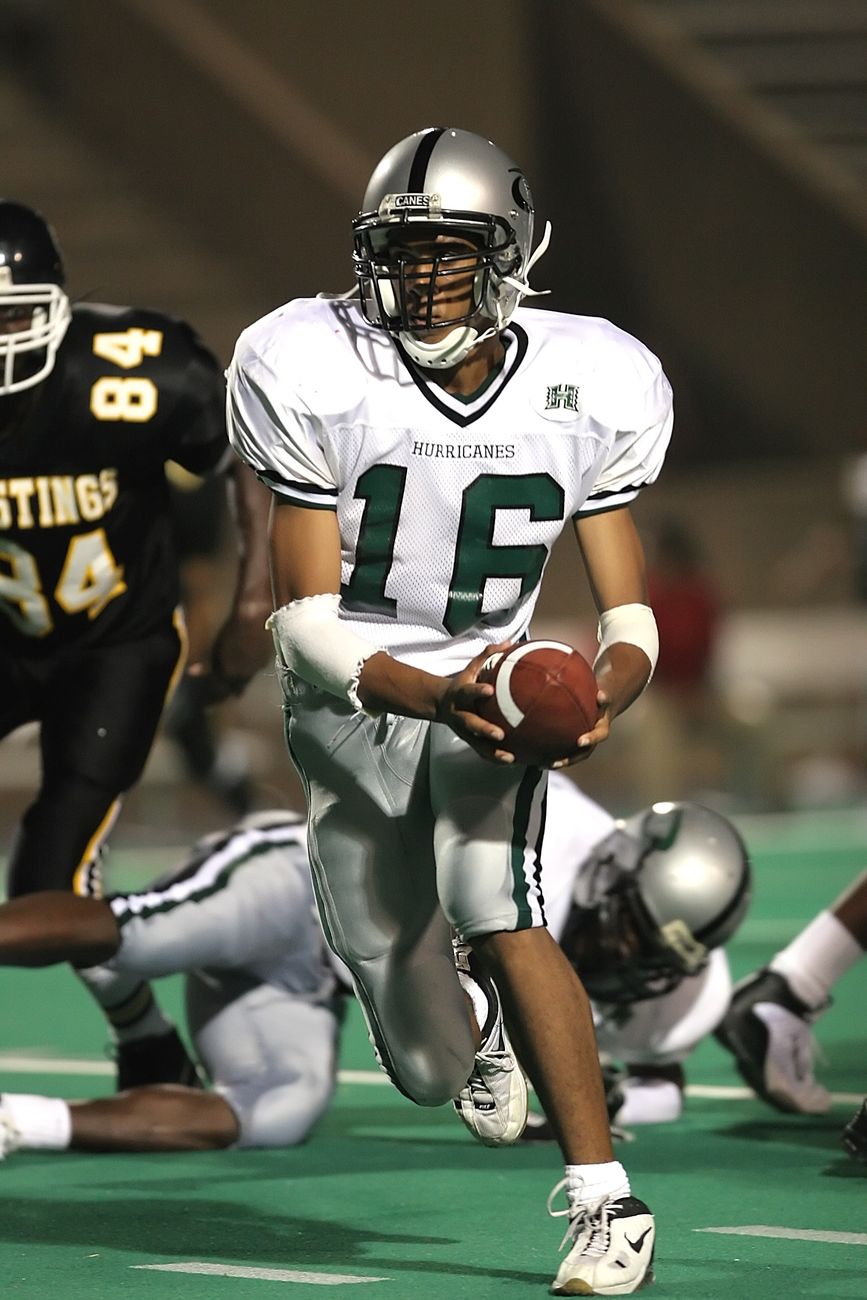
A familiar passing line can conceal a radically different workload.
What happens if the favorite leads by 14 before halftime? Its quarterback may play well yet miss a season-average yardage line as the offense runs and drains clock. An underdog can do the reverse: inefficient early passing, then 20 hurried attempts against softer coverage.
Top NFL Offshore Sportsbooks for September 2026


A useful player-prop analysis framework therefore separates efficiency—yards per attempt—from opportunity—play volume, pass rate, pace, and time spent ahead or behind. The key estimate is not just the final score, but how long each game state may last. Eligible new customers can get up to $3,000 Welcome Bonus at BetUS sportsbook; terms and wagering requirements apply.
Build the neutral passing baseline
Begin with expected dropbacks, then remove likely sacks and quarterback scrambles to estimate pass attempts. The basic calculation is:
Projected passing yards = attempts × adjusted yards per attempt
Use completion rate as a reasonableness check rather than multiplying it by yards per attempt, since YPA already includes incompletions. A more detailed version estimates completions from completion rate, then multiplies them by yards per completion. Historical splits can help turn season statistics into a single-game passing projection.
Adjust the inputs before applying any Super Bowl script:
- Reduce volume or efficiency for offensive-line injuries and limited receivers.
- Increase target concentration when a high-usage pass catcher is unavailable.
- Weight opponent pressure rate, coverage quality, and strength of schedule.
- Regress unusually high deep-ball efficiency or yards after catch toward a broader average.
This produces a credible middle outcome that can later be shifted for likely score states. Bettors considering the resulting prop should still compare prices and terms; eligible customers can get up to $3,000 Welcome Bonus at BetUS sportsbook.
Translate the market into game states
A point spread is best read as a range of likely score states, not a promise that the favorite leads throughout. A small spread suggests more time in a competitive script; a larger spread raises the chance that the underdog must pass more often late, while the favorite may lean toward the run.
The game total adds scoring context. Implied team totals can be estimated as:
- Favorite: (game total + spread) ÷ 2
- Underdog: (game total − spread) ÷ 2
For example, a 49-point total with a 3-point favorite implies roughly 26 points for the favorite and 23 for the underdog. That supports a close-game baseline rather than an aggressive comeback adjustment.
Markets still describe probabilities, not one fixed narrative. Build a few outcomes—close throughout, favorite ahead late, and underdog ahead late—then weight the quarterback’s expected attempts across them. Bettors comparing the spread, total, and passing props can get up to $3,000 Welcome Bonus at BetUS sportsbook, subject to the promotion’s terms.
Convert game states into pass attempts
Start by assigning expected offensive plays to neutral, leading, and trailing conditions. Apply a separate pass rate to each bucket, then add the results:
Projected attempts = Σ (plays in state × pass rate in state)
For example, a 64-play projection might allocate 32 neutral plays at a 58% pass rate, 14 leading plays at 48%, and 18 trailing plays at 70%. That produces roughly 38 pass attempts before sacks, scrambles, or quarterback substitutions are considered.
Refine total plays with factors that can alter possession count:
- Pace and no-huddle: Faster operation creates more snaps, especially while trailing.
- Fourth-down aggression: Successful conversions extend drives; failed attempts give the opponent shorter fields and can accelerate the script.
- Opponent drive sustainability: A team facing an efficient, methodical offense may receive fewer possessions even if it trails throughout.
- Late-game behavior: Comfortable leads often bring clock draining, while one-score deficits preserve the full passing menu.
Scenario-weight the final attempt totals rather than relying on one exact script. When comparing resulting props and promotions—including get up to $3,000 Welcome Bonus at BetUS sportsbook—check current eligibility, rollover terms, and market rules separately.
Refine efficiency for the matchup
Treat completion rate and yards per attempt (YPA) as separate levers. Pressure can lower both, but quick throws may preserve completions while reducing air yards and yards after catch.
Use small, evidence-based adjustments:
- Protection versus rush: Compare pressure allowed with the defense’s pressure rate, accounting for injuries and blitz frequency.
- Coverage style: Man coverage may create scramble or deep-shot opportunities; zone often encourages shorter completions.
- Explosive-play allowance: Adjust YPA when the defense consistently prevents or concedes gains of 20-plus yards.
- Likely strategy: Consider whether the defense will blitz, play two-high shells, or force sustained drives based on the quarterback’s strengths.
Avoid stacking adjustments that describe the same mechanism. If expected pressure already reduces completion rate and downfield attempts, an additional full downgrade for pass protection would count that weakness twice. Record each change beside its cause, then review the list for overlap.
Apply wind, precipitation, and temperature afterward as contextual modifiers. A separate method for adjusting player props when weather turns bad helps keep matchup assumptions distinct from late forecast changes.
Eligible customers may get up to $3,000 Welcome Bonus at BetUS sportsbook. Terms, location restrictions, and wagering requirements should be checked separately from the prop estimate.
Blend the likely game scripts
A compact scenario model makes uncertainty visible. Each case should adjust volume and efficiency together, since trailing can create more throws but also more obvious passing situations.
| Game state | Probability | Attempts × YPA | Passing yards | Weighted yards |
|---|---|---|---|---|
| Playing ahead | 25% | 30 × 7.4 | 222 | 55.5 |
| Within one score | 50% | 36 × 7.2 | 259 | 129.5 |
| Down multiple scores | 25% | 44 × 6.7 | 295 | 73.8 |
The probability-weighted baseline is 258.8 yards. This is more useful than simply selecting the middle case because it preserves the upside from a pass-heavy comeback script and the downside from protecting a lead.
Small late-game effects can then be layered on. For example, a two-minute opportunity worth 12 additional yards with a 30% chance contributes 3.6 yards. An overtime period worth 18 yards with a 6% chance adds 1.1 yards, producing a final estimate near 264 yards. It helps to account for two-minute and overtime usage separately so those plays are not buried inside every scenario.
The result can be compared with the posted prop and price. Sportsbook promotions should not change the projection itself; bettors considering the offer can get up to $3,000 Welcome Bonus at BetUS sportsbook, subject to its terms.
Measure the script adjustment
Suppose the scenario model assigns a 30% chance of a run-friendly lead, 45% of a close game, and 25% of a pass-heavy deficit. The weighted projection is:
(0.30 × 232) + (0.45 × 260) + (0.25 × 289) = 258.9 passing yards
Adding roughly five yards for late-game urgency and the small chance of overtime produces a central estimate of 264 yards. If the script-neutral baseline was 252, the isolated game-script adjustment is therefore +12 yards.
That figure should not be treated as precise. A practical working range might be 235–295 yards, with the central estimate carrying the most weight. The range accounts for:
- Pressure and sacks disrupting drives—although NFL sacks do not directly reduce individual passing yards
- Turnovers cutting possessions short or creating extra comeback volume
- An in-game injury or unexpected quarterback change
- Overtime adding attempts
- Explosive completions causing large swings on limited volume
The estimate can then be compared with the posted prop and price, rather than the line alone. Bettors considering BetUS sportsbook can get up to $3,000 Welcome Bonus at BetUS sportsbook, subject to eligibility and promotional terms; bonus size should not affect the projection or staking decision.
Compare the distribution with the market
A 264-yard projection does not automatically justify an over. The decision should use the entire simulated distribution, including the frequency of low-volume wins and pass-heavy comeback scripts. Suppose 55% of outcomes exceed a 259.5-yard line.
If the over is -115 and the under -105, their raw implied probabilities are 53.5% and 51.2%. Removing the sportsbook margin makes the over’s break-even probability roughly 51.1%: 53.5 ÷ (53.5 + 51.2). A 55% model probability therefore shows a modest 3.9-percentage-point edge, which should still be tested for sensitivity to sacks, overtime, and line movement.
Receiver props provide a useful cross-check. Projected quarterback completions and yards should broadly reconcile with the team’s target shares, catch rates, and yards per reception. Reviewing whether to favor receptions or receiving-yards targets can expose inconsistencies—for example, a quarterback over paired with receiving projections that imply unusually little team yardage.
Sportsbook promotion
Eligible new customers may get up to $3,000 Welcome Bonus at BetUS sportsbook. Availability depends on age and location; bonus rules, deposit requirements, wagering conditions, exclusions, and withdrawal terms apply. The promotion should not affect the probability estimate or stake size. Gambling is for adults of legal age only; play responsibly and seek local problem-gambling support if needed.
Recheck the projection before placing the bet
-
Confirm the current market
Check the latest prop line, price, spread, total, and no-vig break-even probability.
-
Review late information
Account for weather, offensive-line changes, receiver availability, and credible reports about playing time or strategy.
-
Rerun attempts and weights
Update expected pass attempts and the probabilities assigned to leading, neutral, and trailing scripts.
-
Compare the revised distribution
Measure how often the updated projection clears the prop—not merely whether its average exceeds the line.
-
Set a minimum edge
Pass when the advantage is too narrow to survive ordinary model error or unfavorable price movement.
Eligible bettors can get up to $3,000 Welcome Bonus at BetUS sportsbook; terms and wagering conditions should be checked separately from the prop analysis.
A disciplined passing-yards adjustment comes from probability-weighted workload changes, supported by matchup-aware efficiency assumptions. If news or market movement changes those inputs, the projection should change too.
The goal is not to defend an early estimate. It is to bet only when the refreshed distribution still shows a meaningful edge after uncertainty and price are considered.

3 comments on “How to Adjust Passing Yards Props for the Expected Super Bowl Game Script”
I got stuck on converting the spread and total into actual scenario weights. I understand the idea of favorite-leading, neutral, and trailing states, but the weights still feel subjective—especially when the spread is only 1.5 points.
Is there a reasonable default starting point before adjusting for team pace and aggression?
For a near-pick’em game, a practical starting point is roughly 30% favorite-leading, 40% neutral, and 30% underdog-leading, with “leading” defined by a meaningful score state rather than a one-point margin. Then adjust those weights using each team’s scoring volatility, pace, and likelihood of sustaining drives.
The exact percentages matter less than testing several plausible sets. If your passing-yards edge disappears after a small weight change, the projection probably isn’t strong enough to bet.
This worked surprisingly well for me. I had a 249-yard neutral baseline, then weighted three score states and added a modest late-game allowance; the projection landed at 261, while the QB finished with 267.
The biggest improvement was separating attempts from efficiency instead of automatically raising YPA in a trailing script. I’d definitely been double-counting that effect before 😅