
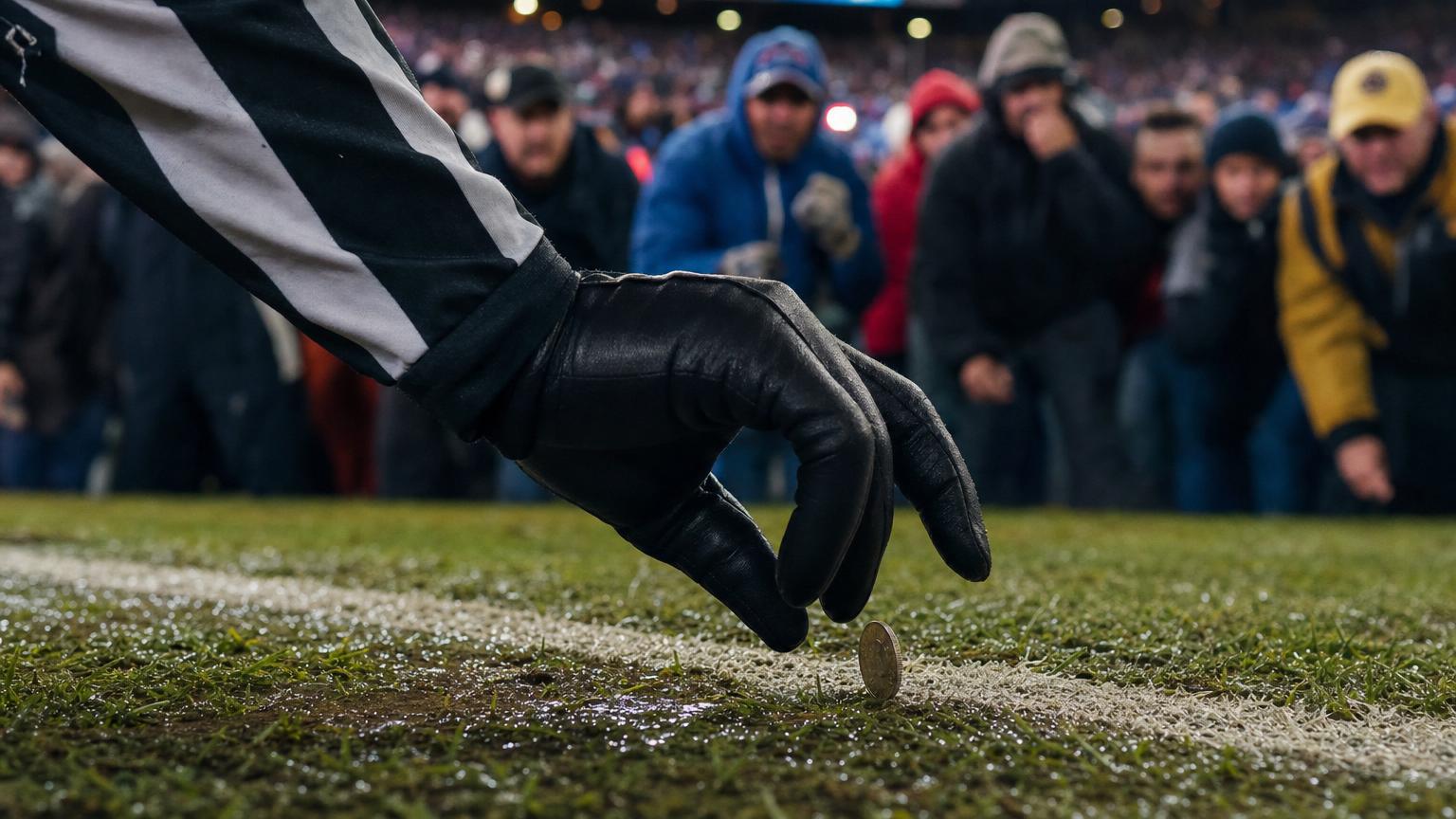
A coin toss looks simple—until the only thing clear is that everyone saw something different.
The referee flips the coin, captains lean in, the camera cuts late, and social media immediately decides the broadcast missed the important part. For a bettor holding a heads-or-tails ticket, that tiny gap can feel bigger than the game itself.
Top NFL Offshore Sportsbooks for August 2026


Settlement is not based on the loudest replay clip or what seemed obvious live. Sportsbooks grade coin-toss props by their posted house rules and by whatever result is officially recognized for that event. If the ceremony is repeated, obscured, corrected, or never formally recorded, the outcome may be graded in a way that feels less intuitive than the bet looked at kickoff. Even offers such as get up to $3,000 Welcome Bonus at BetUS sportsbook still sit behind the same rulebook reality: the market pays only when its stated conditions are met.
Similar coin-toss props can grade on different moments
Heads or tails
This market asks for the physical result of the coin after the accepted toss: heads or tails. It does not care which captain called it, who wins possession, or how the broadcast describes the scene; for wider context, see how Super Bowl props are usually framed.
Team to win the toss
This grades on the team credited with winning the coin toss, usually the team whose call matches the result. If a captain calls heads and the coin lands heads, that team wins this prop even if it makes an unexpected choice afterward.
Team to receive first
This is about the opening kickoff, not the coin itself. A team can win the toss and defer, which often means the other team receives first; that is why this prop can settle opposite from “team to win the toss.”
Ceremonial coin toss
Some events add honorary captains, commemorative coins, staged camera shots, or a pregame ceremony around the actual toss. The bet still depends on the book’s stated grading source, not on which part looked most official on television.
Book-specific listing
Two props with nearly identical names can have different settlement rules if one references the official toss result and another references first possession. Promo language such as “get up to $3,000 Welcome Bonus at BetUS sportsbook” does not replace the market rules, which are the part that matters when something odd happens.
The result that usually counts
For most coin-toss props, the cleanest grading path is the one recognized on the field before kickoff. The referee or game officials confirm the result, the captains make the choice that follows from it, and the game proceeds. That recognized pregame outcome is normally the settlement anchor for sportsbooks.
The TV angle can matter, especially when a coin lands awkwardly, a player blocks the view, or the broadcast cuts away too quickly. Replays, stadium audio, and the referee’s microphone may all help explain what happened. Still, broadcast footage is usually evidence, not the final authority by itself.
A common example is a coin that appears to land one way on camera, while officials announce the opposite and immediately let the winning captain choose to receive, defer, or defend a goal. In that case, many books will grade according to the official announcement and the sequence accepted by game operations, not a freeze-frame debate from the broadcast.
That distinction matters for bettors comparing tickets across books. One operator may reference official league data, another may rely on its in-house trading decision, and a third may wait for confirmation before settling. Promotional offers, such as get up to $3,000 Welcome Bonus at BetUS sportsbook, do not change how the prop should be graded; the house rules and recognized result still control.
The practical takeaway is simple: the coin toss is treated less like a video review and more like an administrative pregame event. Once officials announce a result and the game starts from that decision, later visual confusion rarely overturns normal settlement.
A short replay can be misleading. Settlement usually follows the official toss result used to start the game, unless the sportsbook’s rules state a different source or correction process.
When the Toss Gets Redone
A coin toss is meant to be simple, but the ceremony can get messy. If the coin is dropped before a proper flip, barely leaves the hand, hits a person or object, lands where it cannot be seen, or produces a result officials cannot confidently use, the first attempt is usually treated as no toss.
What matters is not whether a coin physically moved through the air, but whether officials accepted that attempt as the game’s coin toss. If they stop the process and conduct another clean toss, sportsbooks will typically look to the valid toss that the officiating crew recognizes.
Common redo situations include:
- Dropped coin: the referee loses control before the toss is completed.
- Bad flip: the coin does not rotate properly or is clearly mishandled.
- Obstructed landing: the coin hits someone, bounces into equipment, or lands off-camera in a way that prevents confirmation.
- Unusable result: the coin rests at an angle, is covered, or cannot be read.
- Official confusion: captains, referees, or broadcast audio create enough uncertainty that the crew restarts the ceremony.
In these cases, the invalid attempt usually does not settle heads/tails or winner props if a valid toss follows. The cleanest rule of thumb is simple: the toss that starts the official game procedure is the one most likely to count.
Promos such as “get up to $3,000 Welcome Bonus at BetUS sportsbook” do not change grading logic; the house rules and official result still control settlement.
Some books mention abandoned, postponed, or voided events in detail, but say little about ceremonial misfires. When rules are thin, official recognition usually carries the most weight.
When the Broadcast Does Not Match the Grade
A coin-toss prop can feel unsettled when the TV shot misses the landing, the announcer says one thing, and a social clip claims another. Sportsbooks are not always grading from the same public angle viewers saw at home. They may use an official broadcast feed, league data, in-stadium confirmation, or the decision accepted by game officials before kickoff.
That is why a market can grade quickly even when online debate continues. Fast settlement usually means the book has a recognized source for the result, not that every replay has been reviewed in public. If that source is later corrected, some books reserve the right to resettle under their house rules.
A practical way to read these situations:
- Announcer comments can be wrong, especially during live pregame chaos.
- Screenshots and short clips may miss the call, the catch, or the referee’s signal.
- Sportsbook grading often follows official or contracted data rather than social consensus.
- Later confirmation can matter if the original feed was incomplete or contradictory.
Anyone betting novelty markets, whether casually or while claiming a get up to $3,000 Welcome Bonus at BetUS sportsbook offer, should save the ticket details and check the book’s settlement rules before assuming a public clip is decisive.
The defer decision changes the bet
Winning the coin toss only gives a team the choice. It does not automatically mean that team receives the opening kickoff. Many teams elect to defer, which lets them choose to receive after halftime. The opponent then usually takes the ball to start the game.
That creates a common split between props that sound related:
| Prop type | What it usually cares about |
|---|---|
| Heads/tails | The face of the coin after the accepted toss |
| Team to win toss | The team awarded the choice |
| Team to receive opening kickoff | The team getting the ball first |
| First possession | Often the team credited with the first offensive drive, depending on house rules |
A simple example: Team A calls heads, heads lands, and Team A wins the toss. Team A defers. Team B receives the opening kickoff. In that one sequence, heads wins, Team A wins the toss, Team B wins the receive prop, and first-possession grading may depend on whether the book treats the kickoff return team or the first offense as the relevant event.
This is the same kind of wording trap seen in novelty markets such as first score safety rules, where the everyday phrasing can feel obvious until a rare sequence tests the fine print. Promo pages, including offers to get up to $3,000 Welcome Bonus at BetUS sportsbook, do not replace the market rules. The safest read is always the exact bet label, not the football assumption behind it.
House Rules When the Script Breaks
Most sportsbooks leave room in their rules for odd pregame situations. If the league, referee, or official data feed recognizes a result, the coin-toss market usually stands, even when the broadcast missed it or showed it poorly. The book is not necessarily grading the clearest camera angle; it is grading the accepted event result.
The opposite can happen when the event never properly occurs. A canceled game, abandoned ceremony, or prop tied to a toss that is not officially completed may be voided, with stakes returned. Some books also void if the listed condition cannot be satisfied, such as a market posted for a neutral-site game that later changes format.
Corrections are another wrinkle. If a market is settled using bad feed data, a mistaken stat entry, or an internal entry error, the sportsbook may regrade it after confirmation. That can turn an early win into a loss, or restore a bet that was graded incorrectly.
High-attention props may disappear early because operators are managing risk and information timing. Coin toss markets are small, but they attract bursts of action close to kickoff, especially for major games. Books may lock them during lineup-style news windows, remove them once officials are in place, or stop action well before the teams reach midfield. That timing is part of when sportsbooks stop accepting props.
Promotions should be treated separately from grading rules. For example, players can get up to $3,000 Welcome Bonus at BetUS sportsbook, but the listed house rules still decide how unusual settlements are handled.
A screenshot of the market helps, but the sportsbook’s posted rules usually control settlement. The key items to look for are official source, void conditions, and whether the book reserves the right to correct grading errors.
A quick pre-bet check that prevents most coin-toss headaches
-
Confirm the exact market name
“Coin toss result,” “team to win toss,” and “team to receive first” are not interchangeable. The wording decides whether the bet follows the coin face, the captain’s call, or the opening possession.
-
Open the prop rules before placing the bet
The house rules usually say what source is used for grading and what happens if the ceremony is delayed, redone, or not officially recognized.
-
Look for overtime language
Pregame coin-toss props normally do not include overtime unless the market says so. Any separate overtime toss is usually a different event with its own rules.
-
Separate heads/tails from team wording
A heads/tails prop can settle correctly even when the preferred team loses the toss. A team-based prop follows the accepted winner, not the physical side of the coin.
-
Save the accepted slip
A screenshot or downloaded bet receipt preserves the market name, odds, stake, timestamp, and ticket number. That evidence matters more than memory if a correction or dispute appears later.
Offers can make coin-toss props more tempting, especially when a sportsbook advertises a chance to get up to $3,000 Welcome Bonus at BetUS sportsbook. The bonus terms may affect eligibility, rollover, minimum odds, or withdrawal conditions.
They do not change how a specific coin-toss market settles. The accepted bet slip and the sportsbook’s posted house rules still control grading, even when bonus funds or promo credits are involved.
When a strange coin toss is worth challenging
- Pin down the market: coin face, toss winner, first receiver, or first possession.
- Check whether officials accepted a toss or ordered a redo.
- Compare the grade with the posted rules before assuming the broadcast angle proves anything.
A fair read starts with the exact wager, then follows the event as officials handled it. Even when a promotion says get up to $3,000 Welcome Bonus at BetUS sportsbook, the prop still settles by house rules, not by how odd the ceremony looked on TV.
A dispute is strongest when the accepted toss, the official record, and the sportsbook grade do not line up. Save the bet slip, screenshots, timestamps, broadcast clips, and official references. Strange-looking flips happen; not every one is a grading mistake.

3 comments on “How Coin-Toss Props Settle When Something Unusual Happens”
The defer example is where I still get tripped up. If Team A wins the toss, defers, and Team B receives the opening kickoff, then a “coin toss winner” bet and a “team to receive first” bet obviously split.
But what about books that label it something vague like “Team A to win toss and receive” in a same-game promo? Is that usually treated as two conditions needing both to happen, or do some books basically read it as “wins toss OR gets ball first”? Feels like the kind of wording that causes 200 screenshots and everyone yelling in the app chat lol.
If the market says “win toss and receive,” I’d treat that as both conditions needing to be true unless the rules define it differently. The key is whether it’s a combined proposition or just sloppy shorthand for a coin-toss outcome.
You’re right that promos are the danger zone. They sometimes use marketing language that’s less precise than the actual bet slip, so the slip wording and linked promo terms matter more than the banner copy.
Good point about not disputing every weird-looking broadcast angle. I’ve seen people insist the TV showed tails when the ref clearly announced heads and the teams lined up accordingly.
One edge case I’m curious about: if the ref mis-speaks on the mic but the captains and kickoff procedure show the opposite result, would official gamebook data usually override the announcement? Or is the mic announcement considered the settlement moment for face-result props?